

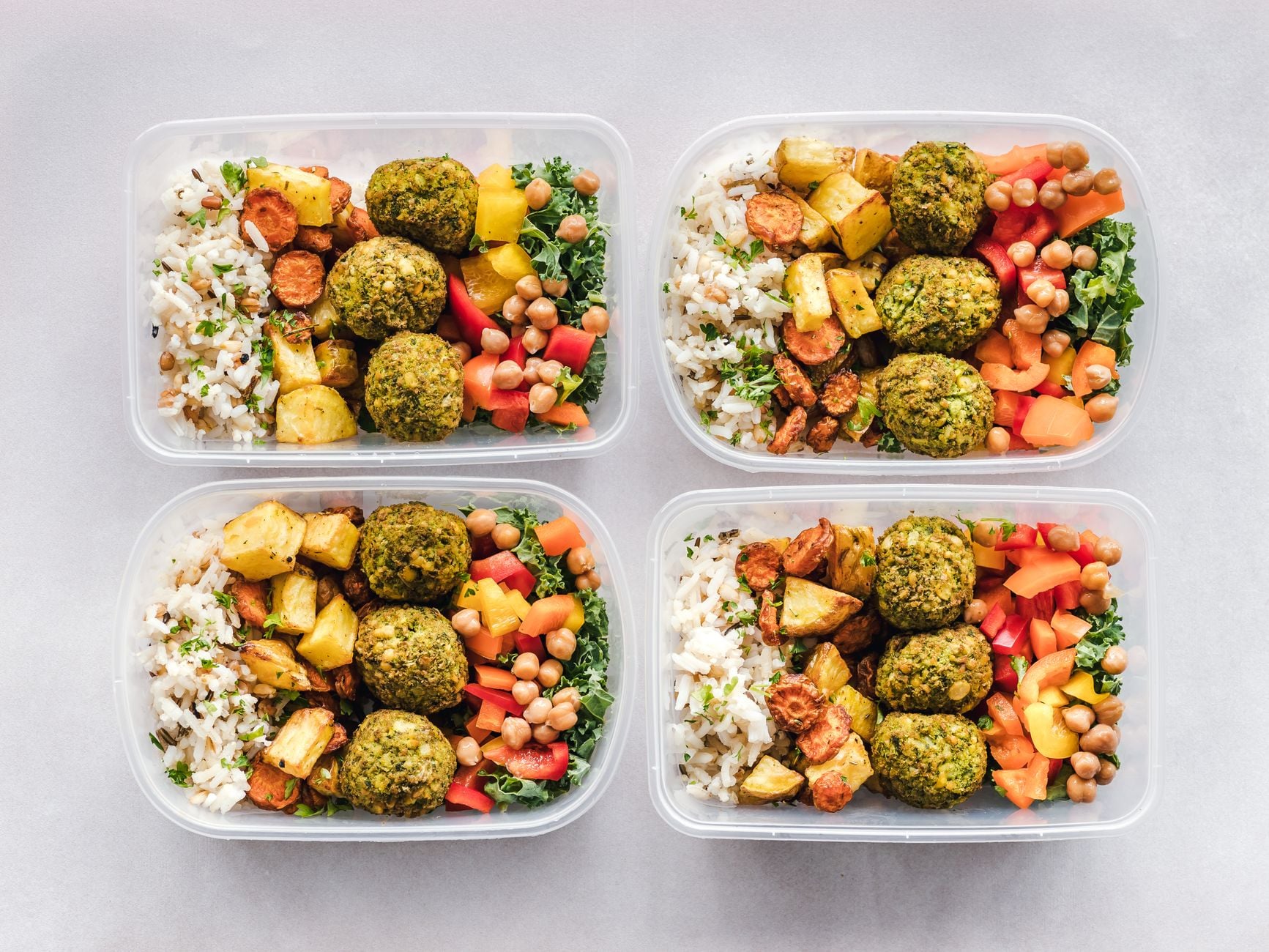
There is a particular kind of person who opens the fridge at lunchtime and reaches for exactly what they ate yesterday. They are not disappointed by the repetition. The absence of a question is part of the appeal.
It is easy to read this as dullness, rigidity or a lack of interest in food. Sometimes it may be. But eating the same meals can also be a small piece of deliberate infrastructure: one recurring part of the day that no longer asks for comparison, negotiation or invention.
Nothing here is nutrition guidance. The same-meal pattern says nothing by itself about whether a person’s food meets their needs, and I am interested only in the behaviour around choosing it.
I understand the attraction. On a day already crowded with messages, work, family logistics and other people’s requests, deciding between six acceptable lunches can feel like an oddly expensive use of attention. A familiar meal is an answer written yesterday and reused today.
The better phrase may be decision reduction
“Decision fatigue” has become the standard explanation for routines like this. It carries an intuitive idea: after making enough choices, a person becomes mentally tired and later decisions become worse.
There is research behind the phrase. A 2008 paper led by Kathleen Vohs reported that participants who made repeated choices subsequently showed less persistence or self-control on other tasks. The authors interpreted choosing as drawing down a limited self-regulatory resource.
That resource model later ran into serious replication trouble. In 2016, researchers coordinated 23 preregistered laboratory replications with 2,141 participants. Their combined estimate of the ego-depletion effect was very small, and the confidence interval included zero.
This does not mean people never become tired of deciding. It means the neat battery metaphor, in which each choice consumes the same inner fuel, is not settled psychology. Context, motivation, autonomy, familiarity and the difficulty of the choice may matter more than the raw number of decisions.
So I prefer “decision reduction” here. It describes what the repeated meal plainly does without claiming a mechanism the evidence has not resolved. The person faces one fewer open question.
Habit explains more than a depleted battery
A repeated meal also fits what psychologists know about habit. Wendy Wood and Dennis Rünger describe habits in their review in the Annual Review of Psychology as responses learned through repetition in recurring contexts. When the setting becomes familiar, the context itself can cue the action.
Lunch at the same time, in the same kitchen, can begin to prompt the same sequence without a fresh internal debate. That is different from saying the person has no capacity for variety. The choice has moved from daily deliberation into a standing routine.
I wrote recently about if-then plans and the gap between intentions and action. A repeated meal has a similar structure, even when nobody writes it down: if it is a weekday lunch, then this is what I make. The cue and response have already met.
That arrangement can feel calm because it removes the need to reopen a decision that has repeatedly produced an acceptable result. It is less about heroic discipline than about refusing to hold another meeting with oneself.
More options do not always feel worse
The reframe still needs a boundary. We should not assume every menu, wardrobe or streaming catalogue overwhelms everyone.
Benjamin Scheibehenne, Rainer Greifeneder and Peter Todd examined 50 published and unpublished experiments on “choice overload”. Their 2010 meta-analysis found an average effect close to zero, alongside considerable variation between studies. Larger assortments sometimes discouraged choice or reduced satisfaction, but sometimes they helped.
The conditions matter. Choosing among unfamiliar options with unclear trade-offs is not the same as selecting a favourite lunch. A person who enjoys food exploration may find a broad menu energising. Another may regard lunch as a practical interruption between two blocks of work.
Neither orientation is more mature. The value of variety depends partly on whether variety is the point.
Repetition can protect attention without becoming an identity
People often describe the same-meal habit as optimisation. I am wary of that word when it turns every domestic routine into a performance system.
A repeated lunch does not have to prove that somebody is unusually focused. It can be cheap, available, familiar, connected to culture, easy to prepare or simply pleasant. A household may repeat meals because its members know what everyone will eat. A person living alone may prefer buying ingredients they can reliably finish. Those explanations are ordinary enough.
The pattern also has costs. A routine that once removed friction can become inconvenient when the day changes, the ingredients disappear or other people are involved. Someone can protect so much attention from minor choices that any interruption begins to feel larger than it is.
Habit research does not say automaticity is always good. Habits preserve whatever response has been repeated, whether it still serves the situation or not.
This is why I find the older Silicon Canals piece on how routines can reduce reliance on willpower useful but incomplete on its own. A routine can make a useful action easier. It can also make the question “Does this still fit?” less likely to be asked.
The same meal can mean several different things
From the outside, repetition looks uniform. From the inside, it can carry very different meanings.
For one person, the meal is a practical default during a demanding workday. For another, it is a sensory preference. For someone else, it reflects cost or limited local options. It may be a family custom, a temporary phase or a task they do not wish to make interesting.
This is where the decision-fatigue reframe is useful, as long as it remains a possibility rather than a diagnosis. It challenges the assumption that visible sameness means a narrow inner life. The person may be leaving room for variety somewhere they value it more.
I have noticed that modern life often treats every available choice as a freedom that must be exercised. Declining to choose can look like missing out, even when the existing answer is satisfying.
Some repeated meals are ruts. Some are rituals. Some are just lunch.